
Some major markets cap interchange. No major market caps network (scheme) fees.
In the UK that uncapped line rose at least 25% in real terms and added at least £170 million a year in cost.
That is not an oversight. Two regulators examined these fees closely and both declined to set a price cap. The Reserve Bank of Australia said why. Its Payments System Board "does not consider that the RBA has sufficient evidence to pursue scheme fee price caps at this time." Not authority: it has compulsory information-gathering powers. A defensible cap would need more cost information on network services, plus time, resources and cooperation.
Which is the asymmetry. In the same review it did set lower interchange caps: consumer credit to 0.30% from 1 October 2026, and a first 1.0% cap on foreign-issued cards acquired in Australia from 1 April 2027.
Why can regulators cap interchange but not network fees?
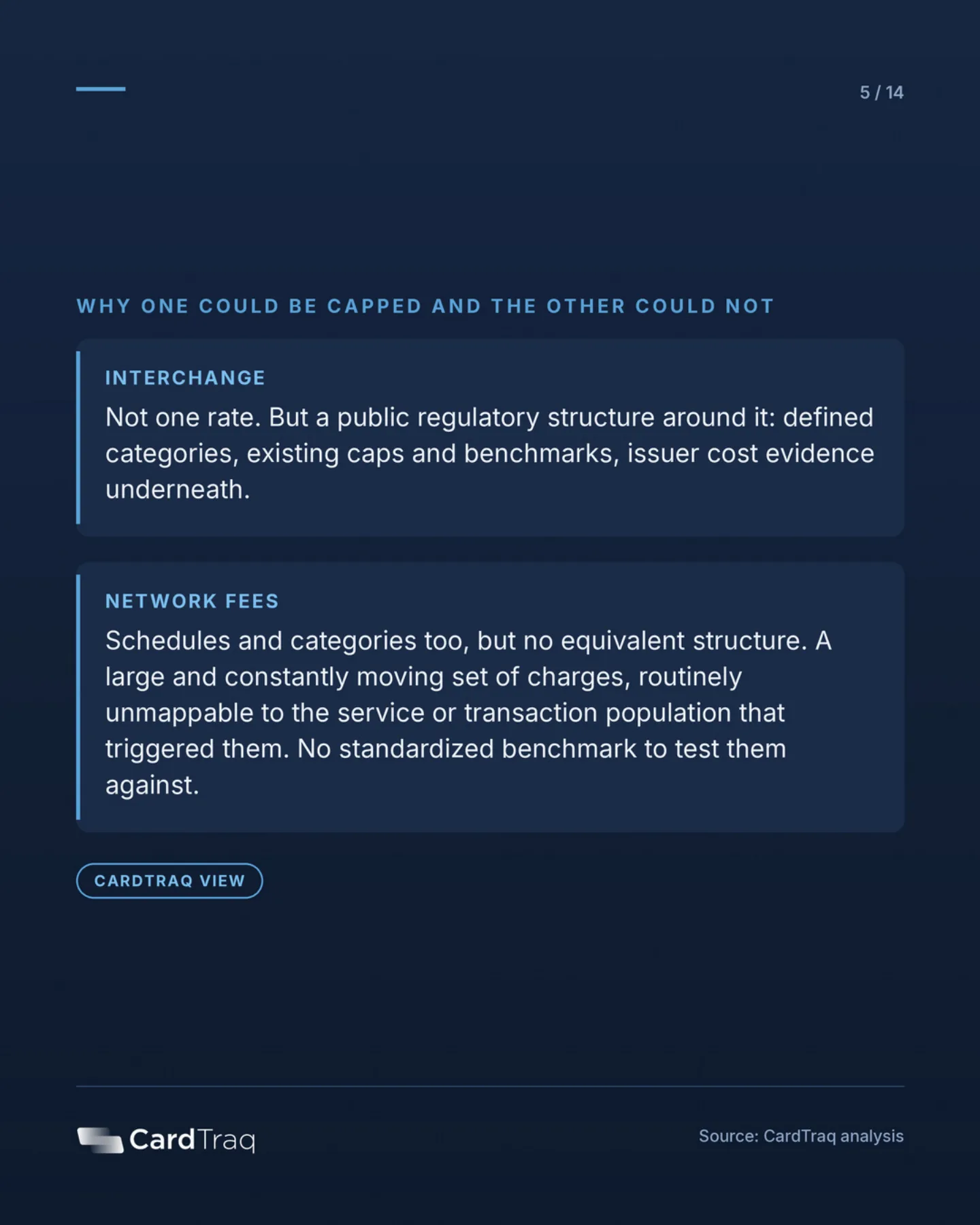
Interchange is not one rate either, and network fees are not lawless. What interchange has that network fees do not is a public regulatory structure: defined categories, existing caps and benchmarks, issuer cost evidence underneath.
Network fees have no equivalent. A large and constantly moving set of charges across authorization, clearing, settlement, cross-border and behavior, routinely unmappable to the service or transaction population that triggered them, and no standardized benchmark to test them against.
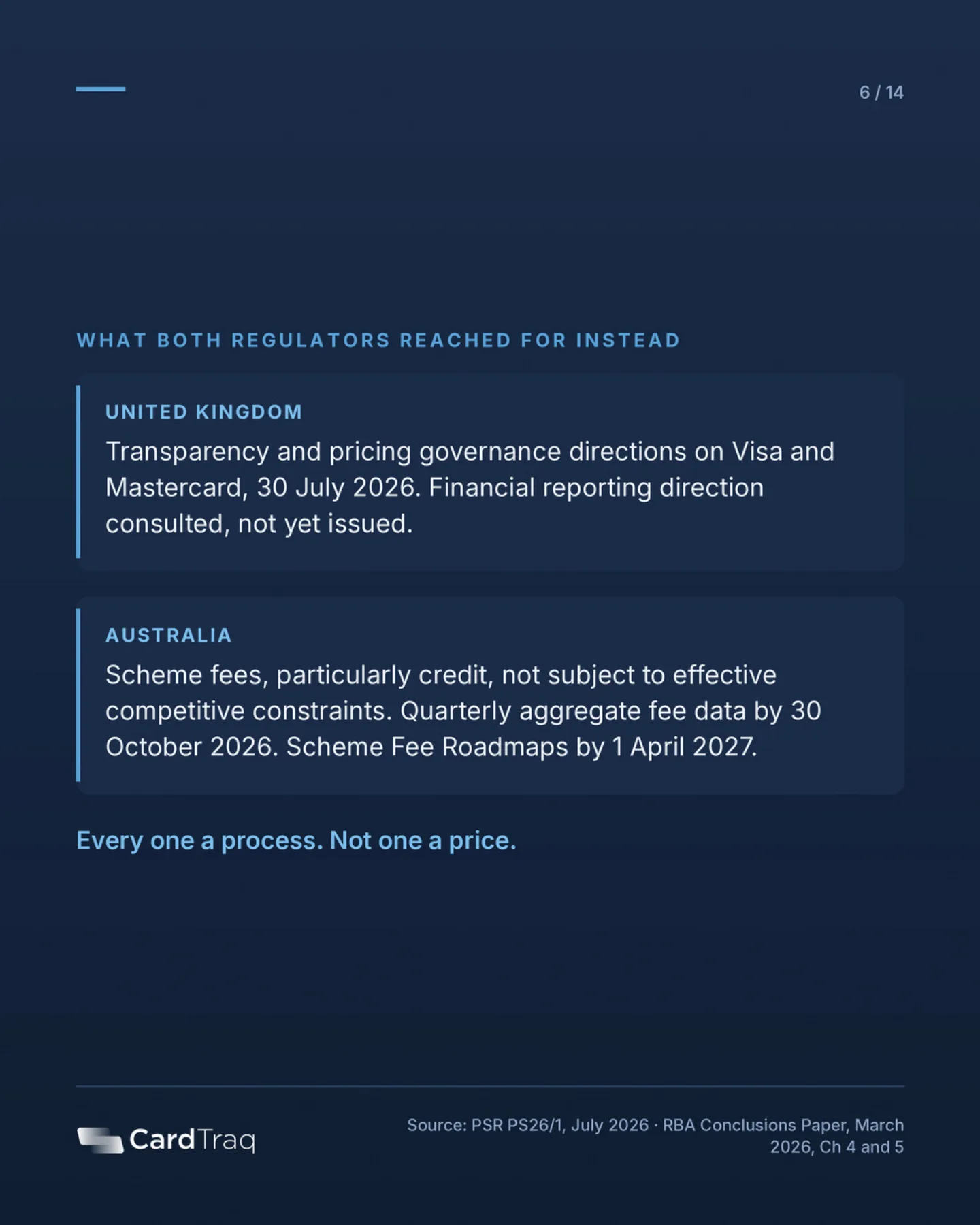
The UK got there from the other direction, with transparency and pricing governance directions on Visa and Mastercard in July 2026 and financial reporting still in consultation. Australia's is quarterly aggregate fee data from 30 October 2026 and Scheme Fee Roadmaps by 1 April 2027.
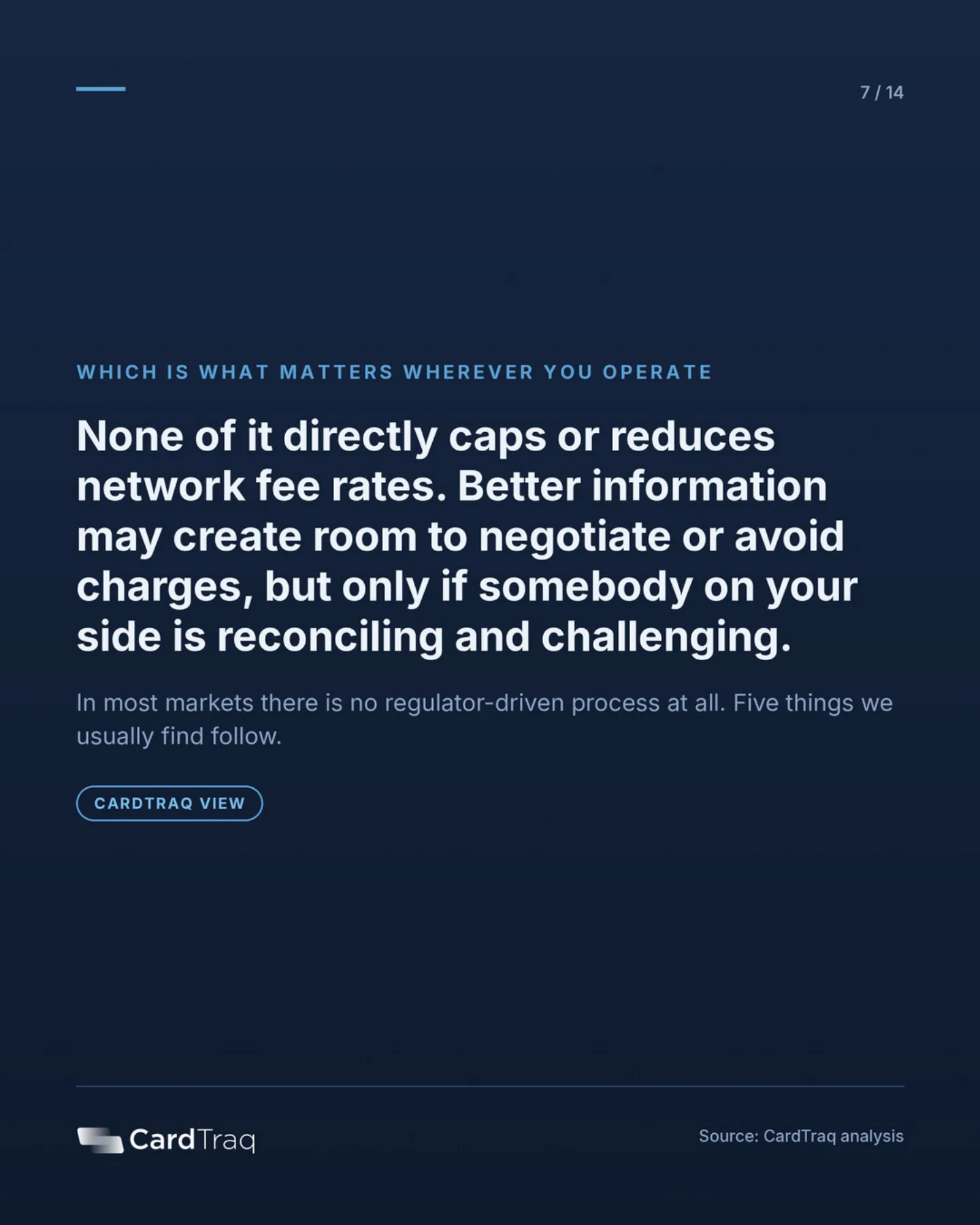
Every one of those is a process. Not one is a price. None of it directly caps or reduces network fee rates. Better information may create room to negotiate or avoid charges, but only if somebody on your side is reconciling and challenging. In most markets there is no regulator-driven process at all.
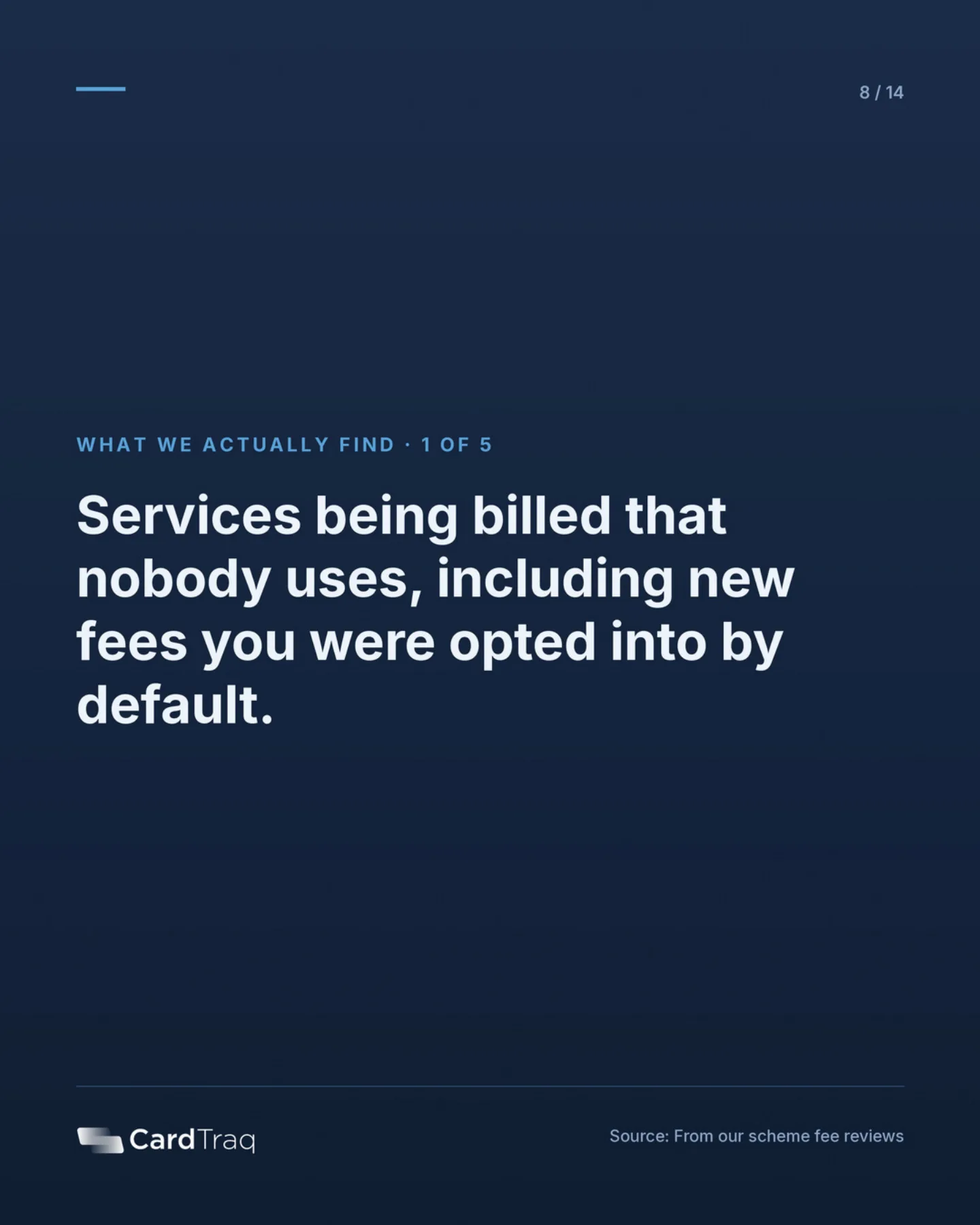
In our reviews, clients sometimes expect one large, obvious misbilled item. What we usually find is a pattern of smaller issues. The carousel has five.
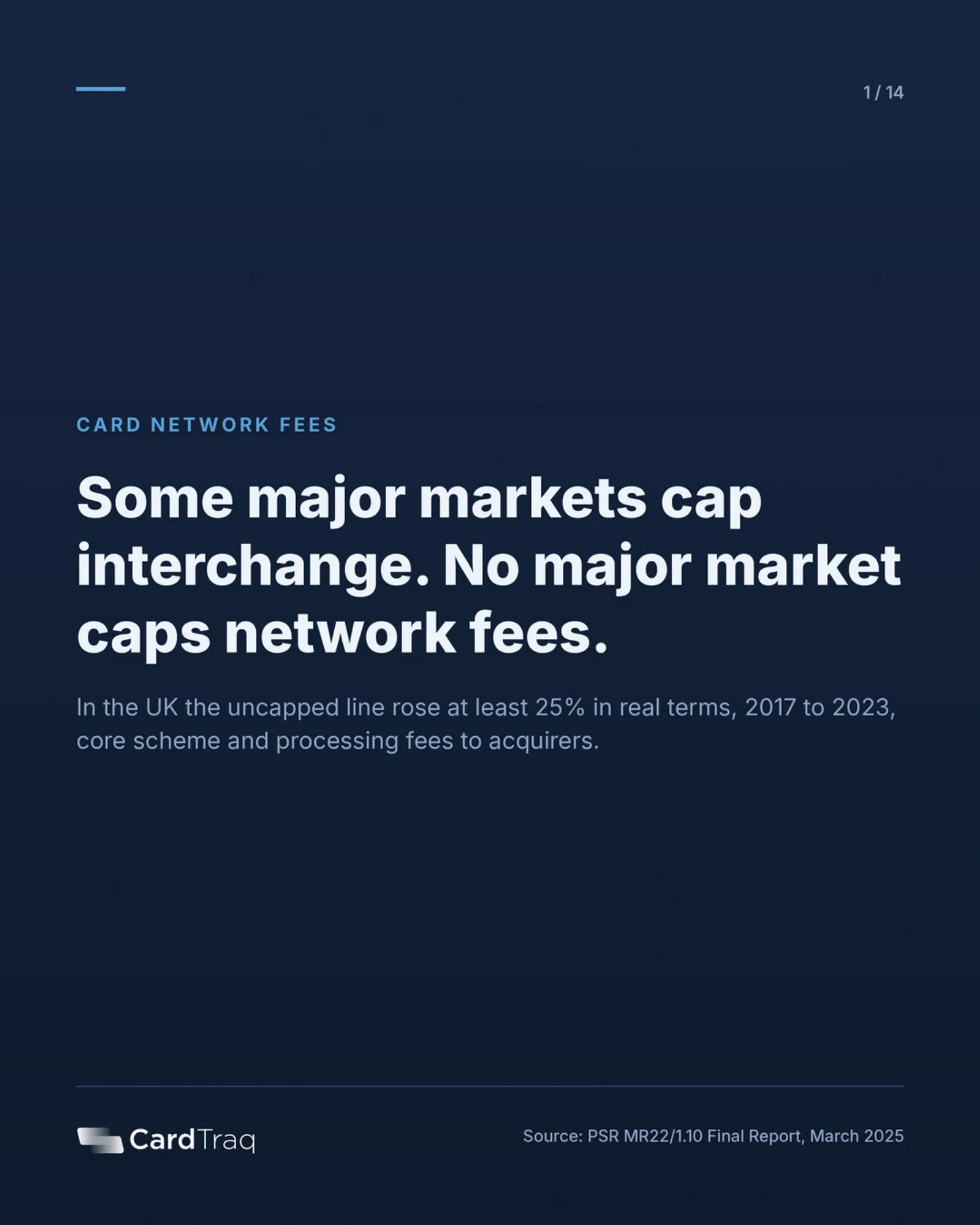
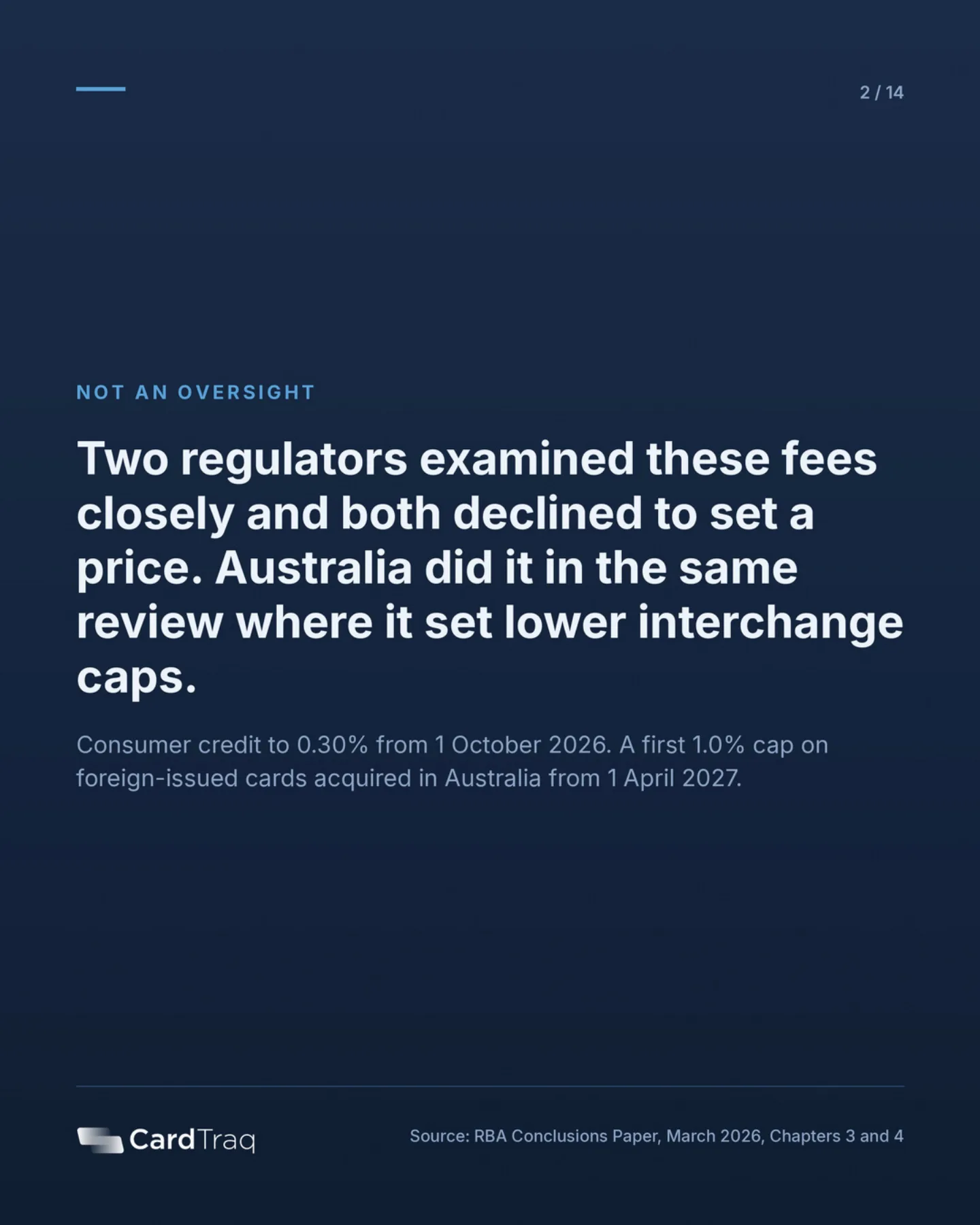
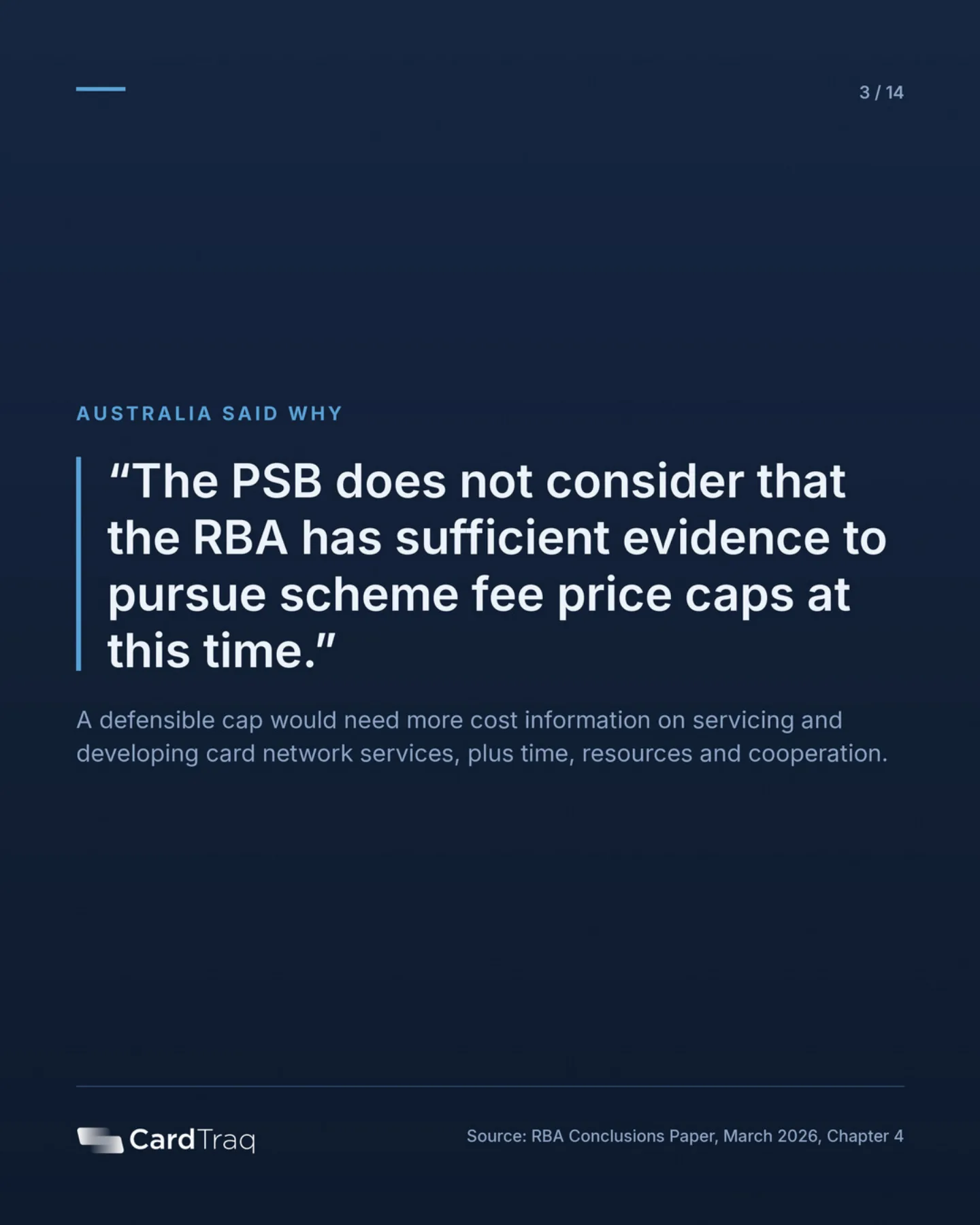
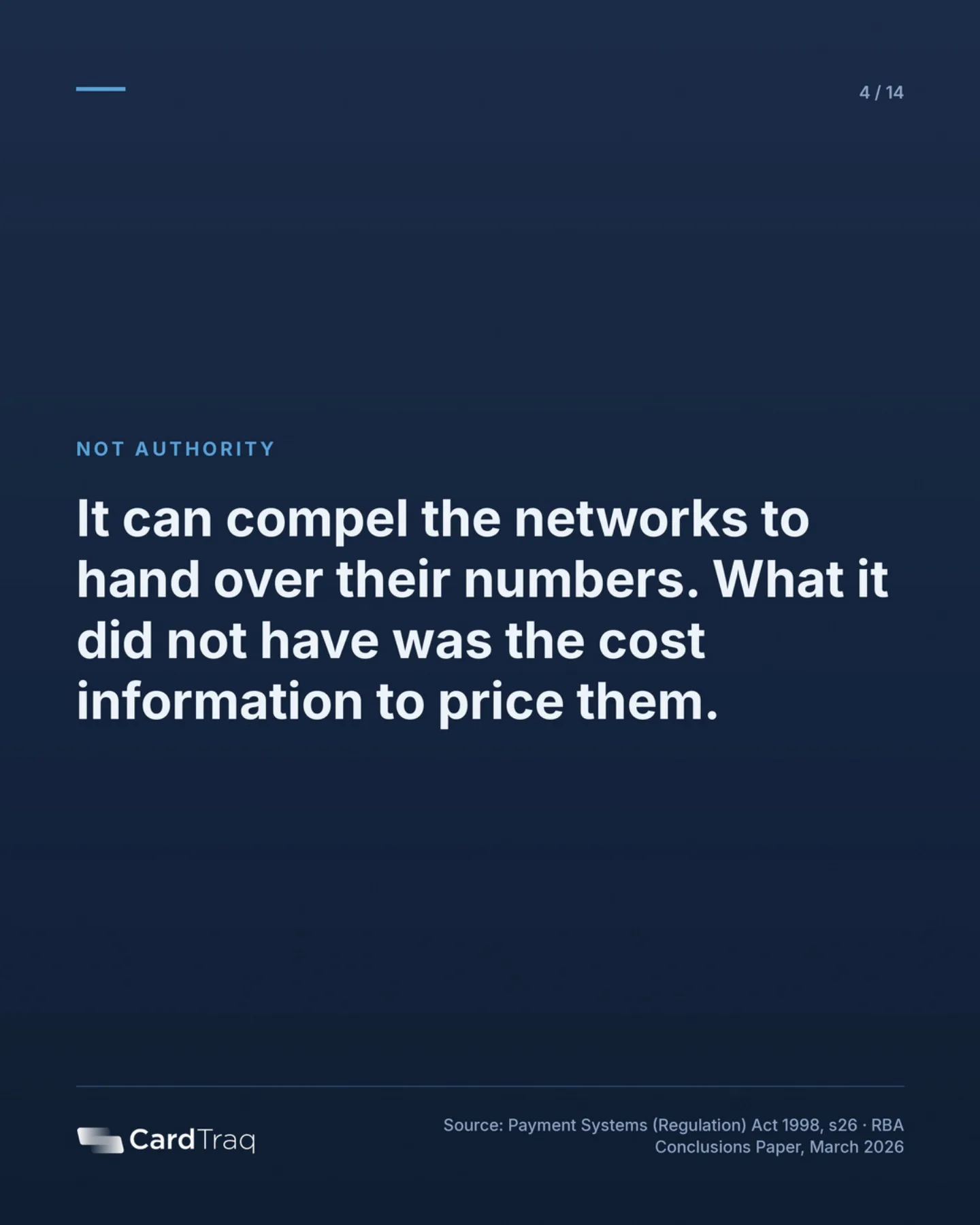

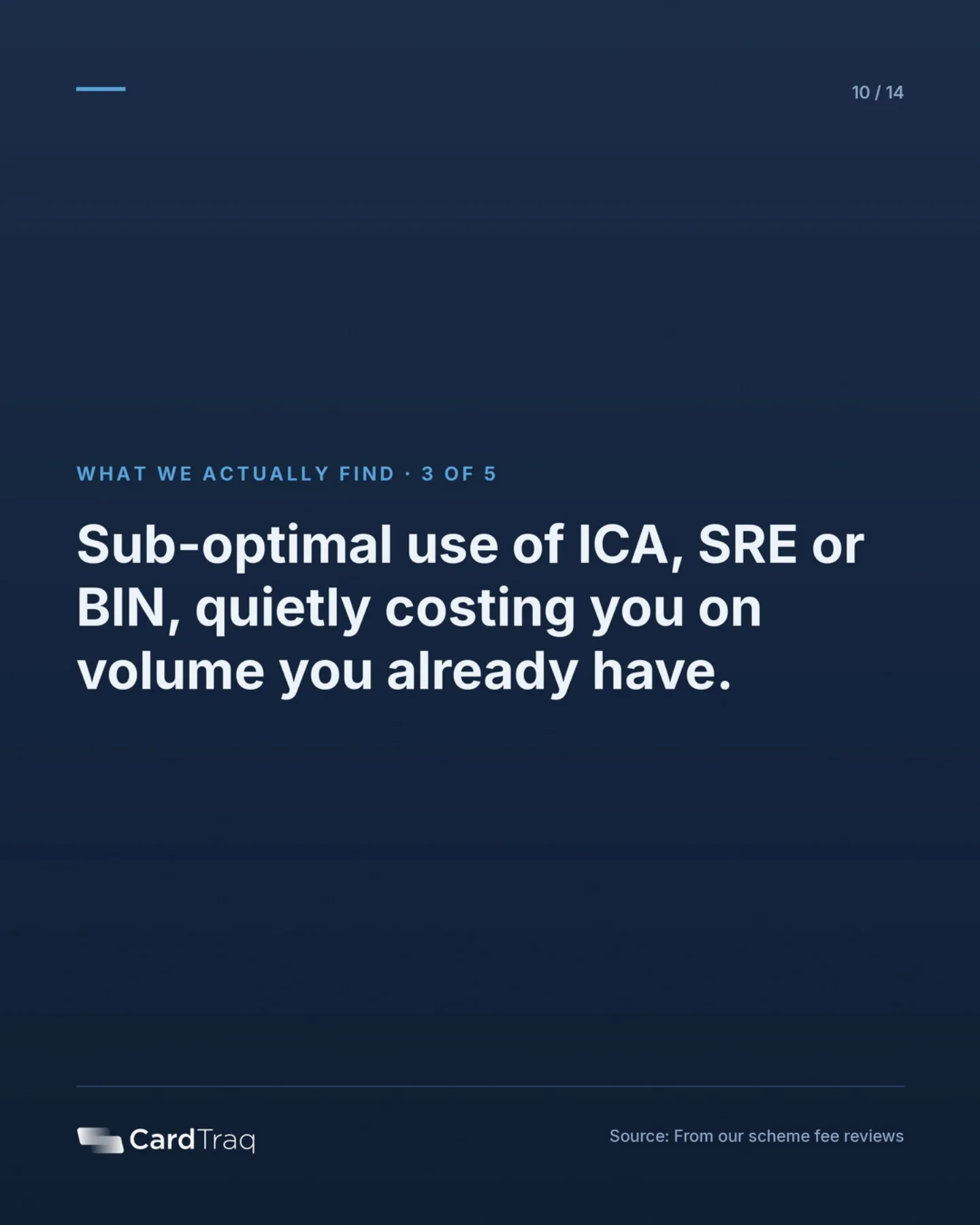
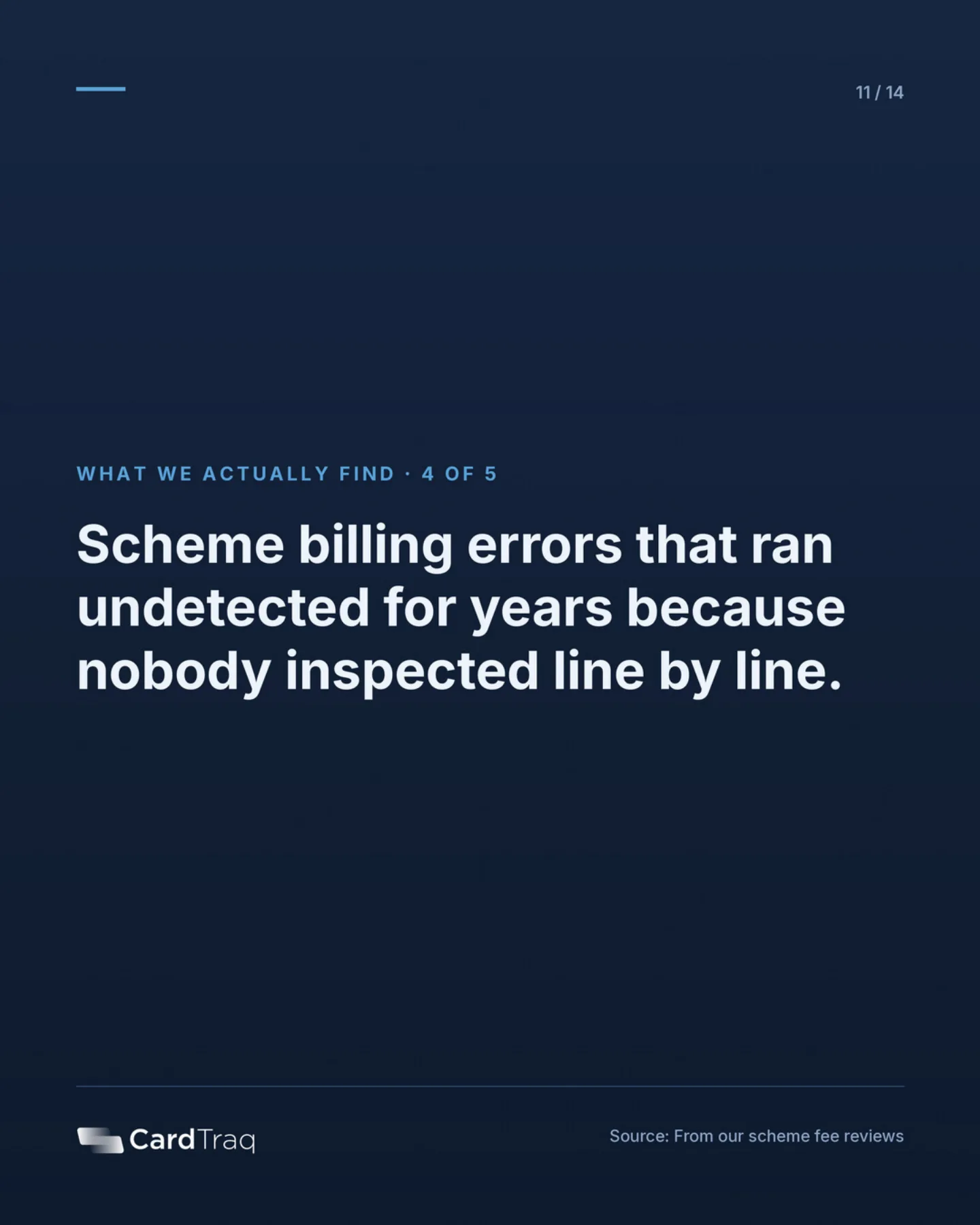
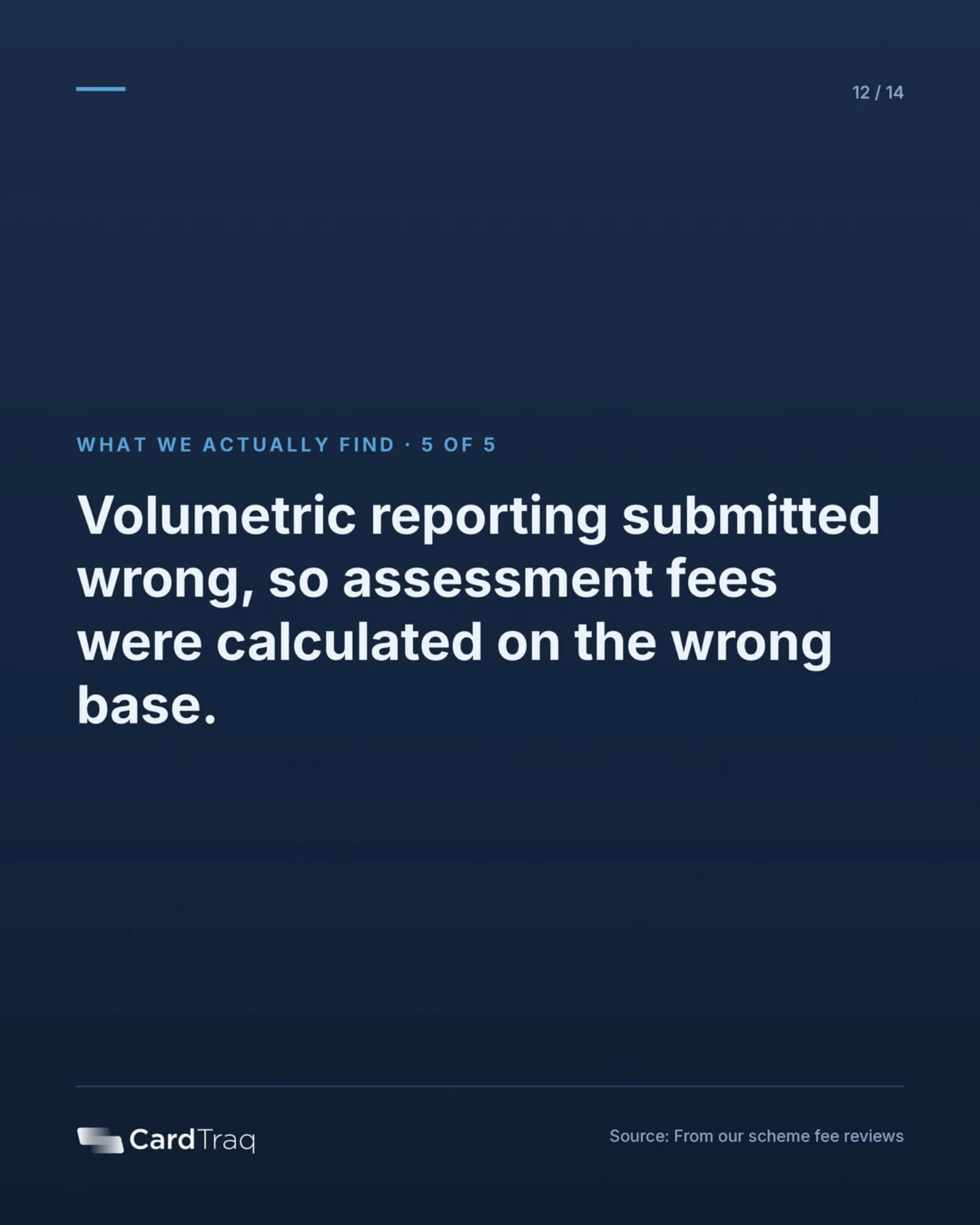

A fourteen-slide summary: why interchange can be capped and network fees are not, and the five things we usually find. Swipe to move through it.
None may be worth a project on its own. Each went past someone who decided it was too small to chase and was right on the arithmetic in front of them. The materiality threshold did its job. It just did it fifteen times, and nobody held the total.
An invoice can be arithmetically correct and still carry charges that are avoidable, misunderstood or wrongly applied.
One honest caveat. This is not a one-off that pays out once. Schedules keep moving, which is why both regulators chose standing processes, not a fix.
That is what CardTraq is for. Including platforms for Network fee tracking and Kajo for Network Compliance, for issuers and acquirers in any market. If you would rather see it running than build it, let me know.
The briefing on what regulators in seven markets concluded is yours, download it here.
Related reading: the Scheme Fee Roadmap and how to build its equivalent yourself, and how issuers can reduce network fees by eliminating optional services.