A regulator has written down what good network (scheme) fee billing looks like. One market gets it delivered. Everyone else can copy it.

Here is the thing itself. By 1 April 2027, each card network designated in Australia is expected to publish a Scheme Fee Roadmap: a public plan setting out how it will handle fee changes, make its schedules usable, enable reconciliation, and fix billing errors. Published, so participants can hold it against what the network actually does afterward.

That's the whole mechanism. Not a cap. Not a rule about price. A plan, in public, that can be checked.

What does the Scheme Fee Roadmap actually deliver?

What it buys Australian participants is concrete. Machine-readable invoices. Transaction-level billing reports at no additional cost. At least six months notice on changes. Every fee classified as mandatory, optional or behavioral.

If you operate anywhere else, none of that is on a schedule.

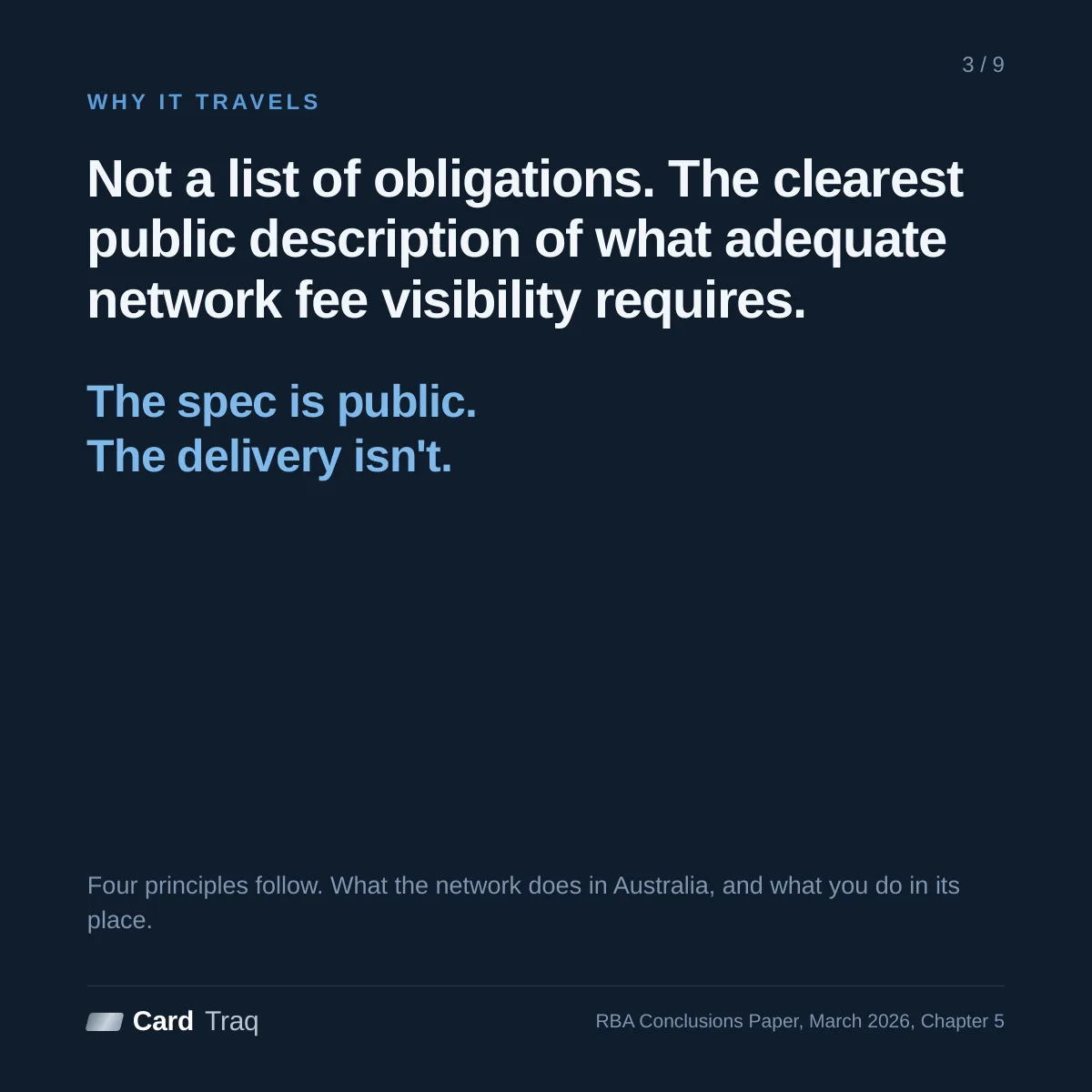
Which makes the roadmap more useful than it first looks, because it isn't really a list of obligations. It's the clearest public description I've seen of what adequate network fee visibility actually requires, written by a regulator that went looking for what participants need.

The spec is public globally. The delivery isn't.

So the question outside that one market isn't whether the networks will expand availability of the enhanced transparency. It's how lean you can run without them. Every line in that roadmap has a build-it-yourself equivalent, and most cost less than the fees they surface.

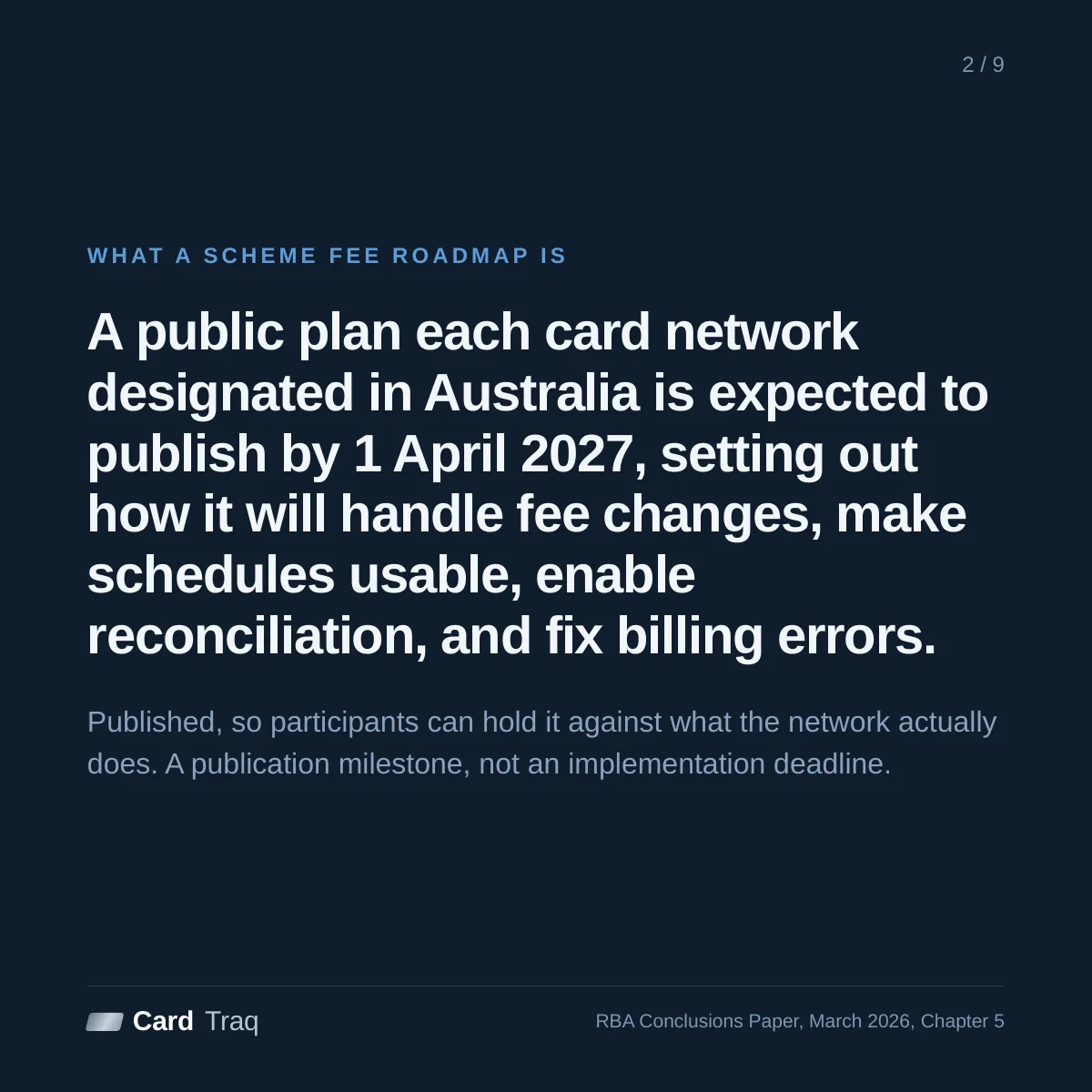
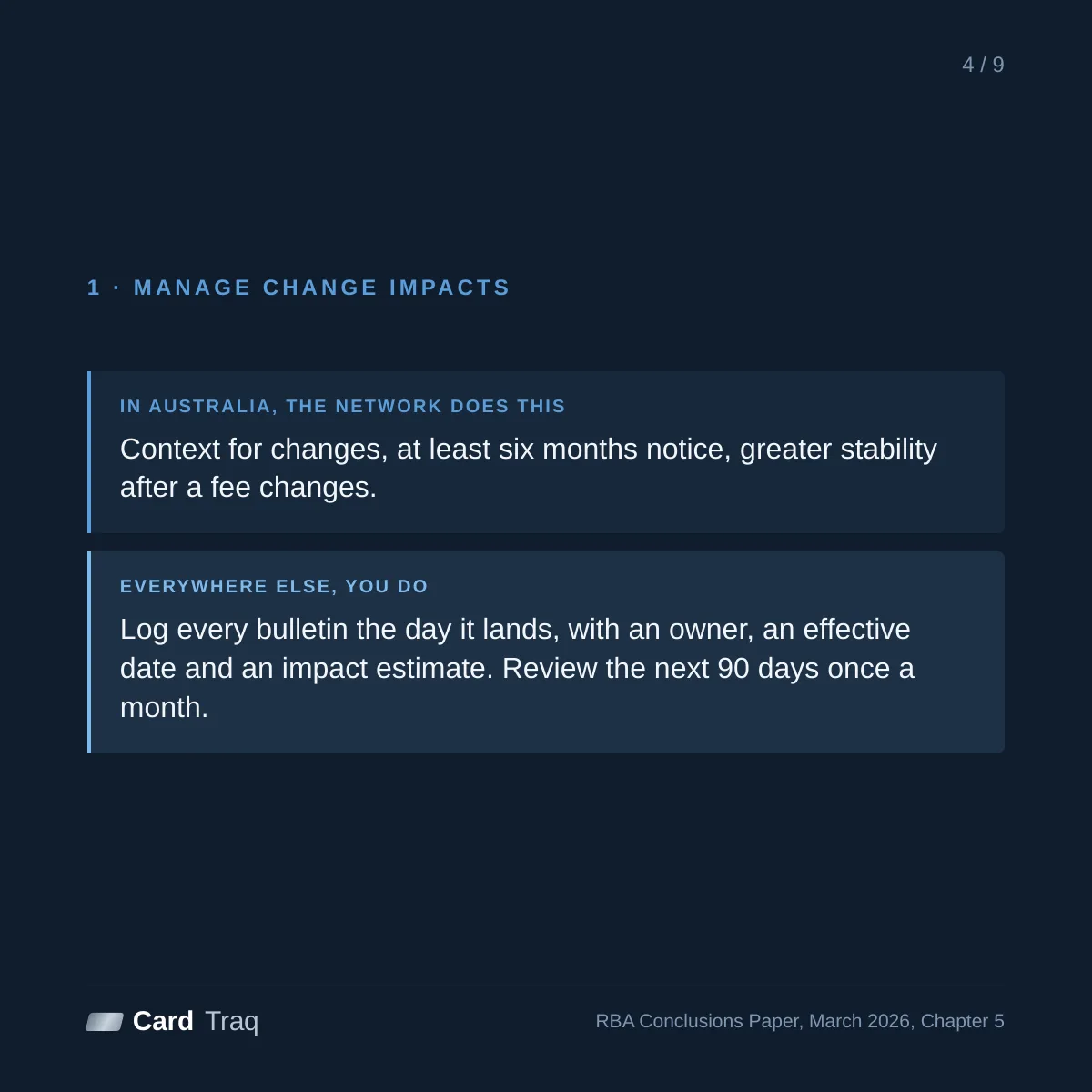
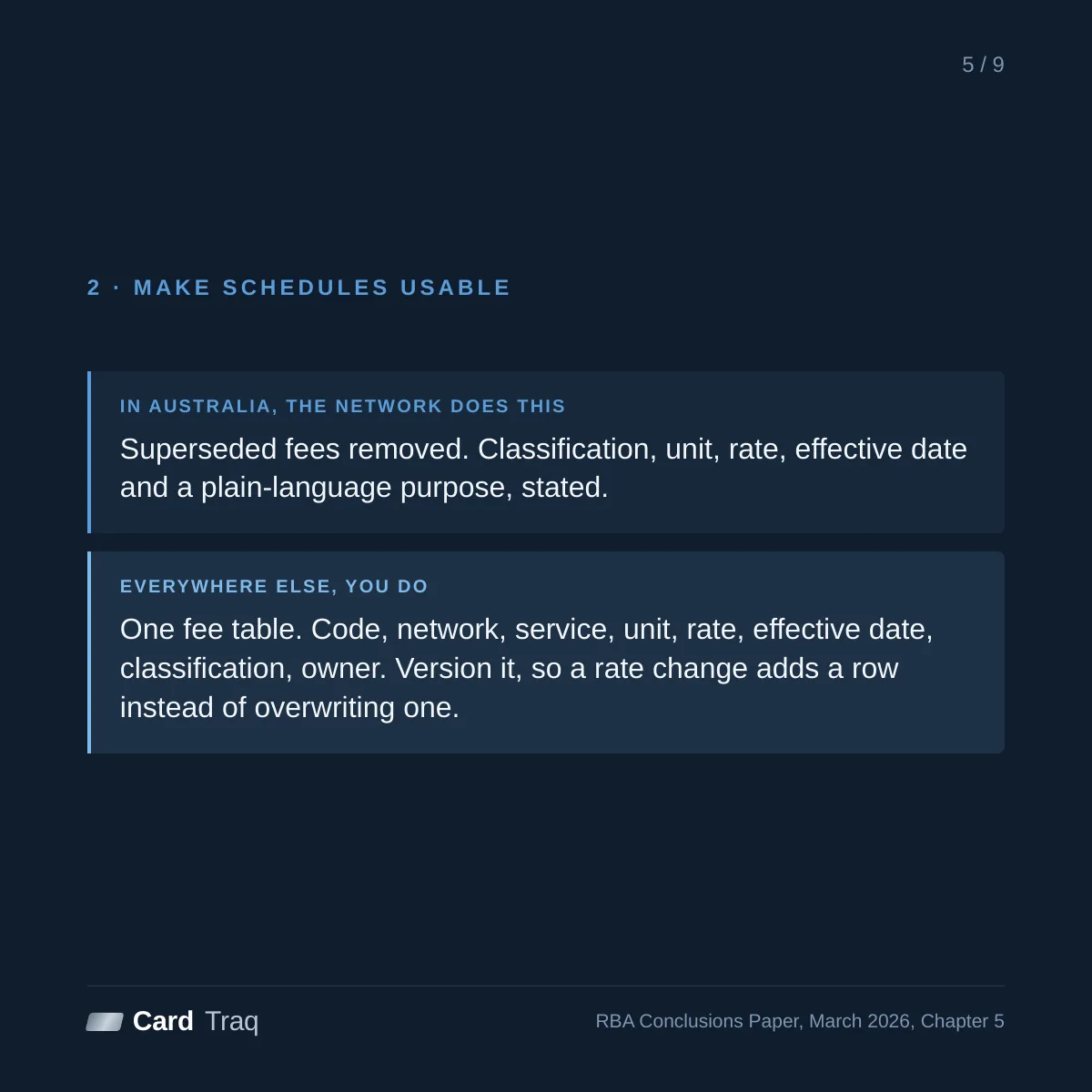
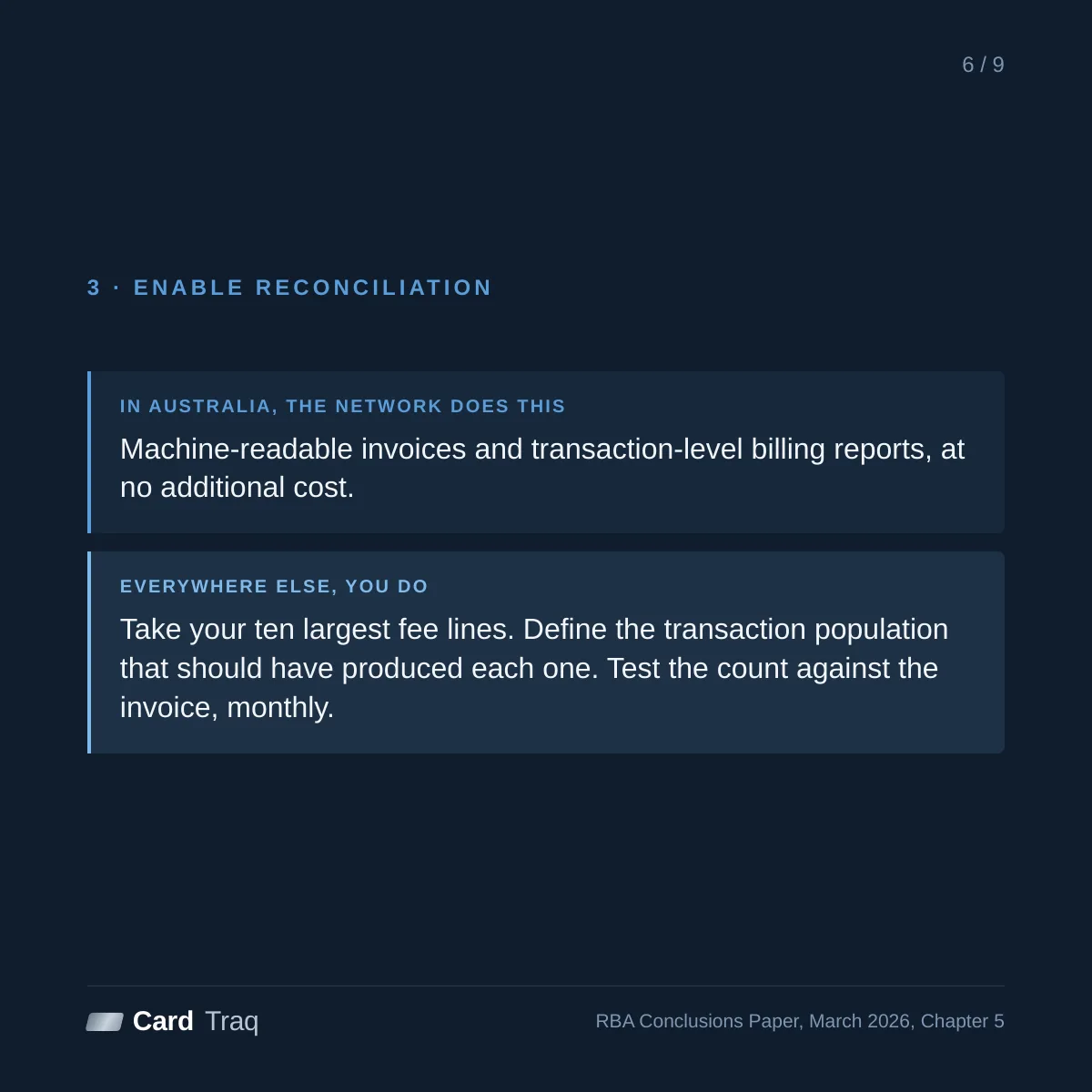
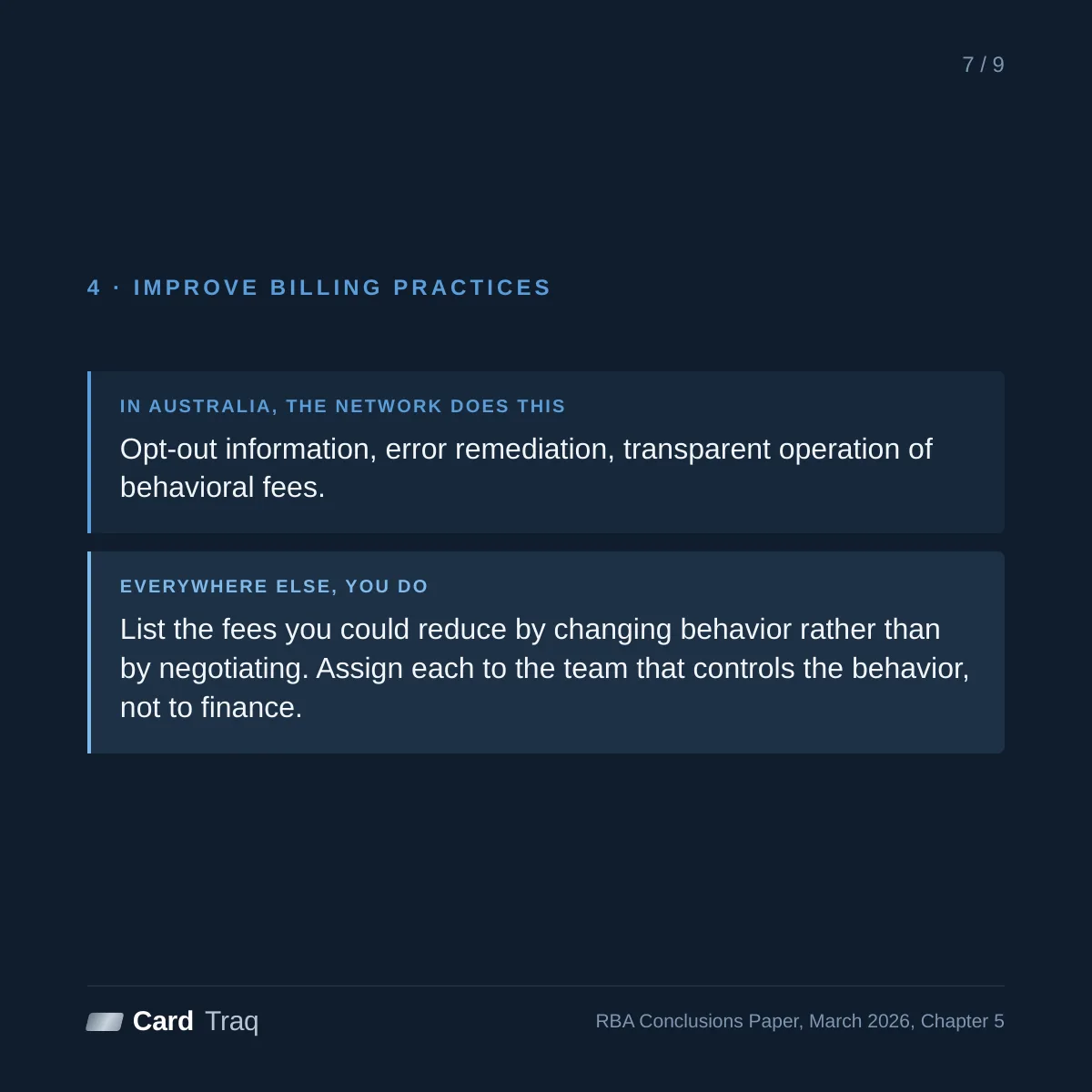
Card network fees: a regulator wrote down what good network fee billing looks like. One market gets it delivered; everyone else can copy it. What a Scheme Fee Roadmap is: a public plan each card network designated in Australia is expected to publish by 1 April 2027, setting out how it will handle fee changes, make schedules usable, enable reconciliation and fix billing errors. A publication milestone, not an implementation deadline. Why it travels: not a list of obligations but the clearest public description of what adequate network fee visibility requires. The spec is public; the delivery isn't. Four principles follow. Principle 1, manage change impacts. In Australia the network gives context for changes, at least six months notice and greater stability after a fee changes. Everywhere else, you log every bulletin the day it lands with an owner, effective date and impact estimate, and review the next 90 days once a month. Principle 2, make schedules usable. In Australia superseded fees are removed and classification, unit, rate, effective date and a plain-language purpose are stated. Everywhere else, you keep one versioned fee table so a rate change adds a row instead of overwriting one. Principle 3, enable reconciliation. In Australia machine-readable invoices and transaction-level billing reports come at no additional cost. Everywhere else, you take your ten largest fee lines, define the transaction population that should have produced each one, and test the count against the invoice monthly. Principle 4, improve billing practices. In Australia there is opt-out information, error remediation and transparent operation of behavioral fees. Everywhere else, you list the fees you could reduce by changing behavior rather than negotiating, and assign each to the team that controls the behavior, not to finance. The question isn't whether the networks will comply. It's how lean you can run without them. Every line in that roadmap has a build-it-yourself equivalent; most cost less than the fees they surface. Nobody is going to require this of you, and in most markets nobody is going to help you either, which is the argument for building it while it's still your own decision. Seven markets, every figure sourced, at cardtraq.com.
A nine-slide summary: each principle with what the network does in Australia and what you do in its place. Swipe to move through it.

The carousel here has all four principles, each with what the network does in Australia and what you do in its place. None of the build steps need a project. They need someone to own them.

Reconstructing transaction-level lineage from what you already receive is real work. It's less work than finding a behavioral fee four quarters late, and considerably less than explaining the variance afterward.

We build this for issuers and acquirers, network fee tracking and bulletin monitoring, so if you'd rather not construct it yourself, I'm always happy to have the conversation!

This is from a briefing I've put together on what regulators across seven markets have concluded about network fees.

Related reading: how two regulators reviewed network fees and neither capped them, and the 30-minute network fee review routine.

Ready to optimize your network fees?

Our team of seasoned experts is here to help you gain control of your payment card costs. Let us show you how CardTraq can optimize your compliance and network fee management to deliver significant savings.

Book a demo or contact us for a personalized consultation.