From Invoice to Forecast: How to Build a Card Network (Scheme) Fee Model

If network (scheme) fees keep “surprising” you, you don’t have a fee model.

You have an invoice.

Invoices explain the past. CFOs and product leaders need the next 30–90 days.

Because network fees hit profitability before anyone has time to react.

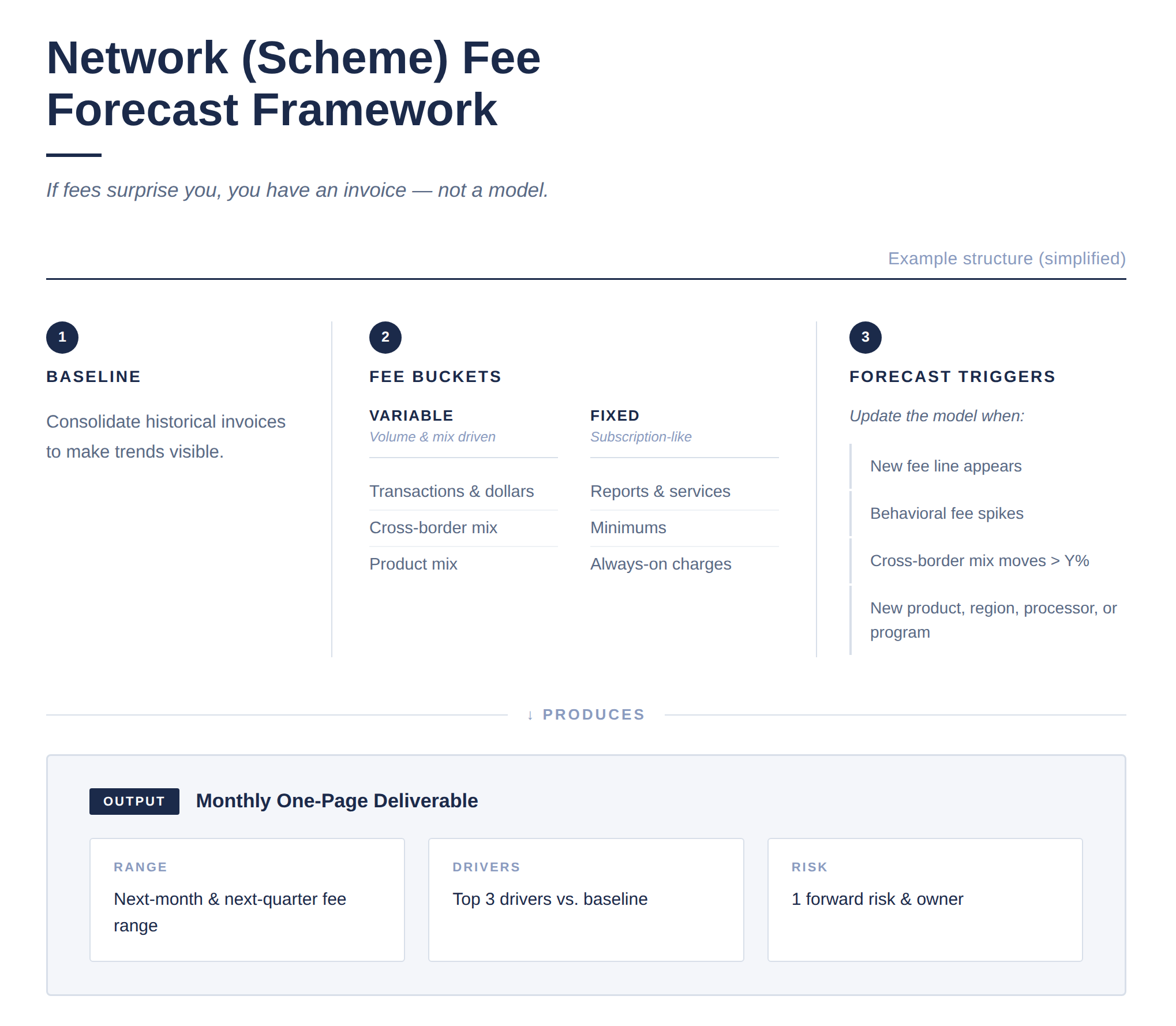
I put the cheat sheet in the graphic.

The only point I’ll add here: you don’t get a forecast until you baseline.

If you can’t consolidate historical invoices into something you can trend, you’ll always be reacting.

Are network (scheme) fees a forecast in your org, or still a month-end explanation?
Steven Leitman

Steven Leitman is Managing Partner of Consulting Resource Group (CRG), a payments consulting and platform firm that helps issuers, acquirers, and BIN sponsors improve profitability through network (scheme) fee optimization, interchange economics, and disciplined cost governance. CRG's Payment Economics practice (CardTraq) includes a suite of platforms designed to manage Visa and Mastercard network fees, interchange performance, and ongoing network rule changes. CRG works with some of the largest global issuers and acquirers.

His work focuses on the economics beneath card programs: Visa and Mastercard network (scheme) fees, pricing structures, interchange qualification, and the hidden cost drivers that materially impact P&L. A core theme is making network compliance measurable and continuous, with data structures, governance models, and platforms that provide ongoing visibility into compliance-driven cost, risk, and fee leakage rather than relying on one-off interpretation exercises.

Steven brings hands-on experience from senior roles at Visa, American Express, and Deloitte Strategy. He publishes regularly on LinkedIn on Visa and Mastercard fee changes, interchange reform, and network compliance.

https://www.linkedin.com/in/steven-leitman/
Previous
Previous

Mastercard just raised the bar for BIN sponsors

Next
Next

Illinois Interchange Ruling: No Swipe Fees on Taxes and Tips - What It Could Mean for Issers